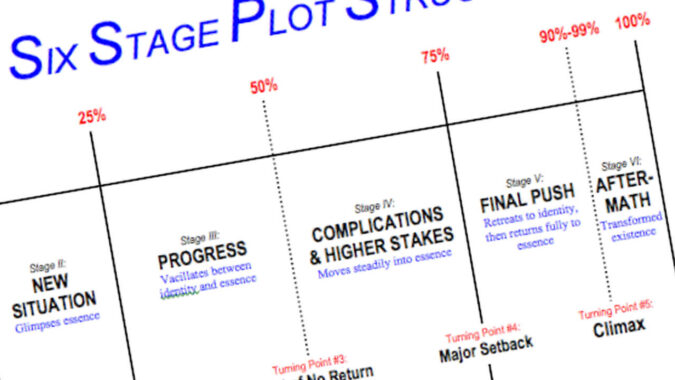
STORY STRUCTURE: 10 Simple Keys to Effective Plot Structure
Structure is something that every agent, editor, publisher, Hollywood executive, public speaker, marketer and story teller talks about, to the point that it can seem complicated.

Structure is something that every agent, editor, publisher, Hollywood executive, public speaker, marketer and story teller talks about, to the point that it can seem complicated.
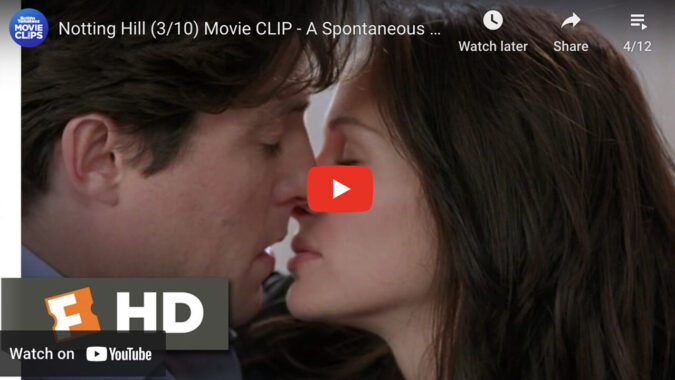
Romantic comedies – especially Hollywood Romantic comedies – are among the most formulaic of genres, with elements that have consistently contributed to these scripts’ and films’ success.

All film making, and all storytelling, has one primary objective: to elicit emotion in the audience. This objective is achieved with only three basic elements, which form the foundation of all story.

Fiction writers must realize that much of what makes a novel great is by definition eliminated from the movie: writing style; interior thoughts of the characters; narration.

Many fiction writers, at one point or another, consider adapting their own work into film. Because both novelists and screenwriters use characters to tell fictional stories.

One of the biggest mistakes screenwriters make is giving too little importance to commercial appeal of their story. Before putting words on the page, a writer should always ask…

Screenwriters and novelists are frequently told that before pursuing representation, they should have at least two completed screenplays or manuscripts.
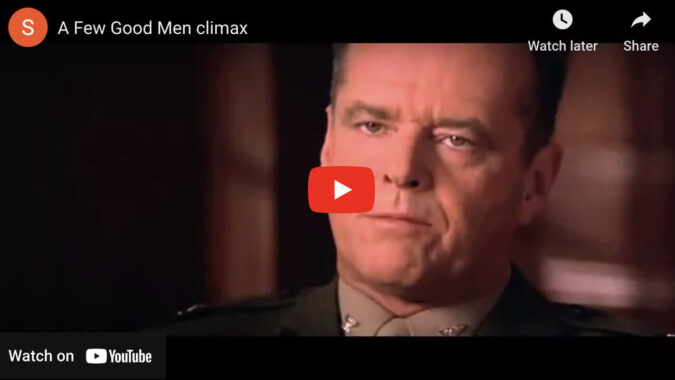
In other articles I discuss everything from story structure and adaptation to pitching and marketing your story. But here I want to cover something much more basic.

If you’ve ever heard me lecture, or ever read almost anything I’ve written, you’ve heard me talk about Outer Motivation — a clear finish line that the hero is desperate to cross by the end of the story.
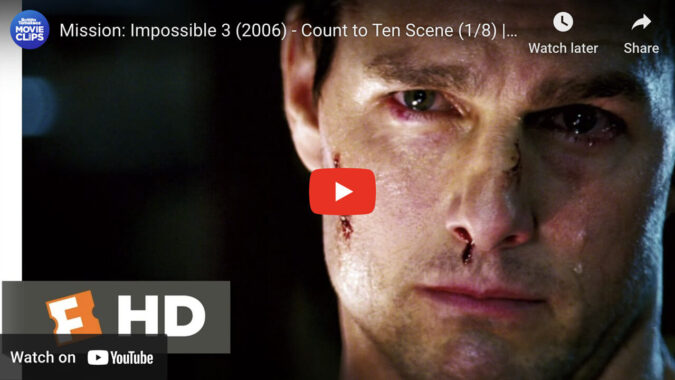
The first 10% of your screenplay is what I term the SETUP, during which you must transport the reader from the real world into the world you’ve created.
Send your questions to Michael and he’ll create a Q&A Article specifically for your question!