When you create a story for the page, stage, or screen, your primary objective must always be to create an emotional experience for your audience.
More than education, enlightenment, or curiosity, we turn to stories because we want to feel something. We want to laugh, cry, get turned on, or get excited in ways that are outside our everyday lives. So we lean in whenever we hear the words, “Once upon a time…”
And the primary source of emotion in almost any well-told story is conflict.
Whatever story you want to tell, in whatever arena, your hero/protagonist must desperately want something that your audience can envision. And that character must pursue that desire all the way to the climax of your story.
That goal will drive your story forward and keep us wanting to turn the page to see what will happen next.
But the emotion you must elicit will grow primarily not from your hero’s desire, but from the conflict they must overcome to achieve it. In other words, it’s the obstacles your characters face that will keep your readers enthralled.
By conflict I simply mean whatever stands in the way of your hero – or any character in your story – from achieving their desires.
The source of that conflict might be the forces of nature – natural disasters, diseases, physical limitations, hostile environments or the laws of physics – that stand in the character’s way.
More often, the seemingly insurmountable obstacles your hero must face will come from other characters in your story – villains, rivals, competitors, or even partners, friends and loved ones – whose own desires and actions are at cross-purposes to your hero’s.
And in stories that go deeper into your hero’s struggle and transformation, their wounds, fears, doubts, identities and false beliefs will create an Inner Conflict that will keep them stuck in a state of inertia.
But whatever their source, these obstacles and challenges must make it seem next to impossible for your hero to succeed. Because the greater the conflict, the greater the emotional experience for the people you want to reach – and impact – with your story.
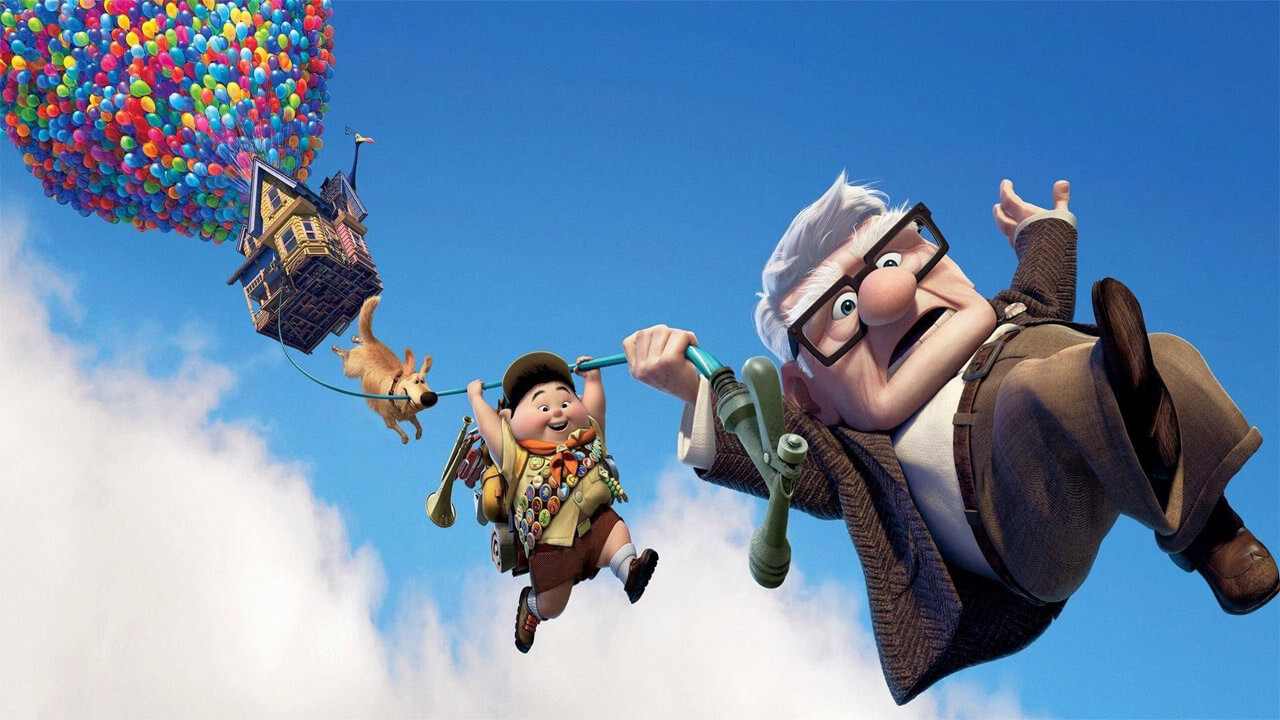
Consider one of my all-time favorite movies, UP.
The hero Carl’s goal is to somehow transport the house he shared with his late wife Ellie to Paradise Falls in South America. This was one of the places they dreamed of visiting on one of their never-realized adventures.
Now look at all the conflict Carl faces from other characters in the story. The city wants to evict him, and construction workers want to demolish his house.
Once he arrives in South America, Russell, the boy who stowed away in Carl’s house, wants to let Dug the talking dog tag along, wants to return Kevin the exotic bird to its children, and later wants Carl to rescue Kevin from the evil adventurer Charles Muntz.
Then Muntz later sets Carl’s house on fire, and is willing to kill Carl and Russell in order to keep the bird. Every one of these characters’ desires stand in the way of Carl’s singular goal.
In addition, Ellie’s death in the prologue, the seeming impossibility of flying a house to South America, the weather they encounter, the hostile environment, and the sheer distance Carl must endure to drag the house to Paradise Falls – all these forces of nature increase the conflict this hero must overcome to achieve his goal.
And underneath all those visible obstacles, look at what a deeper connection we feel to Carl – and the entire story – because of his Inner Conflict. He is consumed with grief over the loss of Ellie, and with the guilt he feels over never giving her the adventures that he promised. These wounds from his past have instilled in him a crippling fear of losing even the memory of Ellie, and of letting go of his attachment to her.
So to protect himself from experiencing even more of that pain, he’s created his identity: a grumpy curmudgeon who wants nothing to do with anyone, and who now literally drags the weight of his past behind him as he trudges toward Paradise Falls.
Until Carl finally lets go of that protective armor, he’ll never achieve his desire to truly honor Ellie’s memory. More importantly, he’ll never experience the fulfillment that will come when he is brave enough to connect with, protect and love Russell, Dug and Kevin.
The heroes of your own stories must confront challenges and obstacles from the time they are introduced, in the setup of your story, until the moment their goals are resolved, at the climax. And as your stories move forward, the hurdles your heroes face must become increasingly difficult to overcome, and must occur more and more frequently.
I want to take you even deeper into the qualities that will elevate the emotional power of your stories by examining the elements of both outer and inner conflict more closely in the articles that follow..
Starting with next week’s what’s-this-got-to-do-with-storytelling? examination of Tiger Woods.
See you then!
– Michael